
Short Film Review “Asha (Hope)” – Estrangement, life’s entanglements, trigger points, and first steps towards healing

WATCH THE TRAILER BELOW:
First, the Recap:
Familial harmony. When it comes to the peaks and valleys of our lives, one hopes that a bedrock of trust can always be found within the love, support, and cherished memories shared by those that are our kin. From our own childhoods, we see what has defined us, molded us into the people we then strive to be for our own families. However, when there has been a past that is burdened by hardship and lost faith in someone who raised us, can we find the strength to let go, much less forgive?
Asha (Ashna Sharan) has a settled enough existence in adulthood, thanks primarily to her doting wife Jax (Mia Naipaul) and endearing daughter Shiv (Rachael Dutta). As Shiv’s 10th birthday celebration and all the preparation involved is reaching its climax, an unanticipated arrival occurs….Asha’s purposefully, long time alienated mother Maya (Priya Deva). With tensions almost immediately taking over Asha’s entire mindset, can she find the fortitude to overcome harsh recollections of previous pain and discover a road to solace again?
Next, my Mind:
I am sure any one of us can attest those times during our upbringing when one or both of our parents might have pushed us a little too far, even with good intention. Yet it was tempered, ideally, with sincere love for us. But, it remains a fact that when a household becomes truly abusive, apathetic, or simply, achingly unlivable due to choices being made by a parent, it’s an entirely different situation to face, let alone endure. While the intricate details may be intentionally veiled, for the most part, in this 11-minute short film from writer/director Moitri Ghosh, producers Nekisa Cooper, Diane Houslin, and Charlie Hopkins along with executive producers Nick D’Angiolillo, Wesley Adams, Sophia Dilley, and Bob Valentine, make no mistake, the specters of dysfunctional situations and their impact upon someone’s psyche are present, evident, and form the core foundational gist of this affecting story about mother/child bonds in multiple ways.
Focused on a woman whose current life of serenity, marriage, and now celebration of her daughter’s upcoming tenth birthday gets entirely upended when her estranged mother shows up at the door uninvited and initially unwanted, the short runtime of the film actually serves it well here, allowing for the build-up and key moments that follow in the narrative to be executed expediently, but also fully, intelligently, and with potent, stirring effect. For this critic, that marks the skills of an adept director who’s able to take significant themes, form them into a cohesive, dynamic tale, and then present it in a manner that does complete justice to the material and characters. Just being honest, given this would appear to be only the second short film for Ghosh as director, I also must give her props as a writer as well for delivering such an important, necessary story with this project and it makes me anticipate her future work.
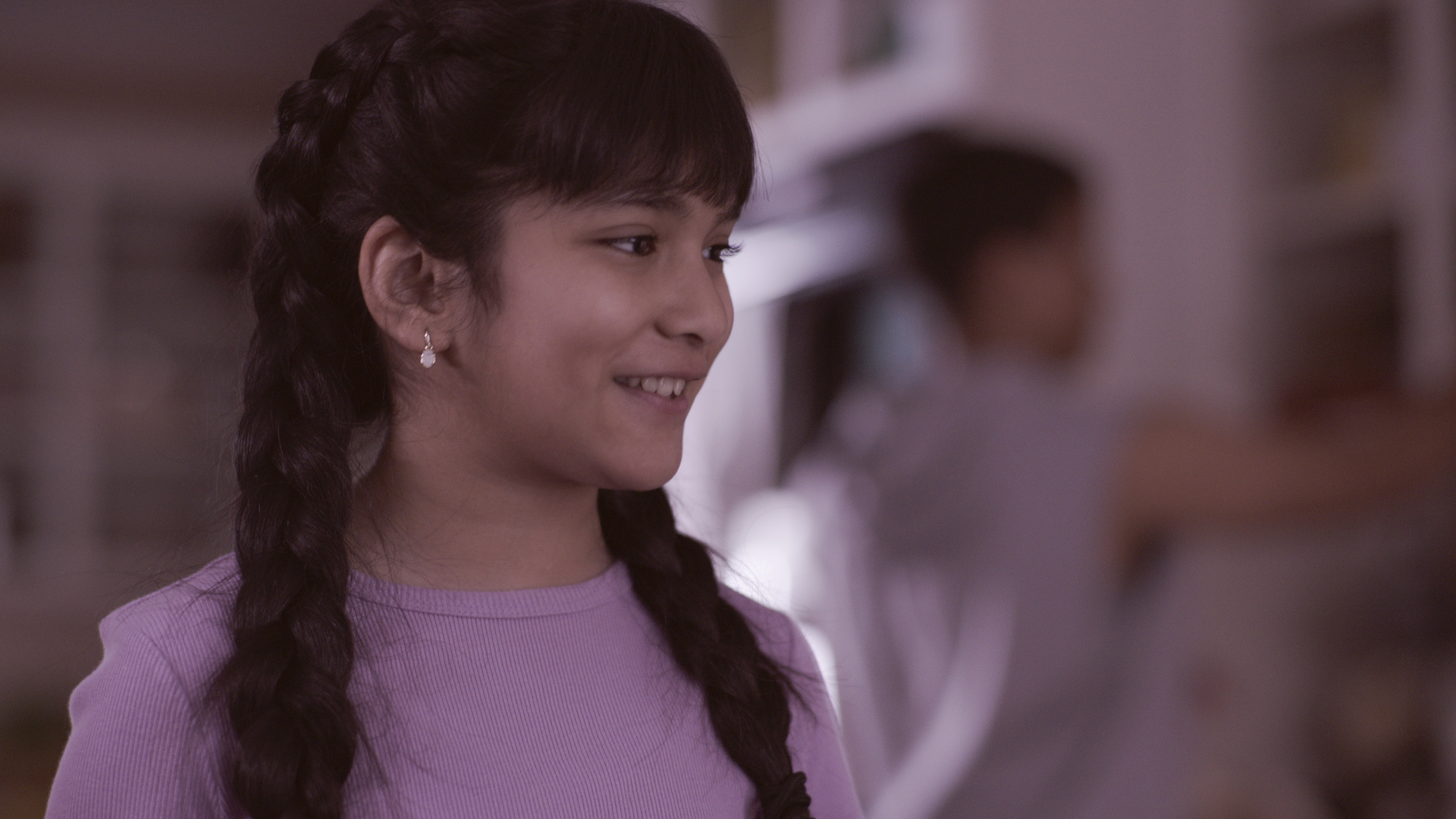

There’s a subtlety and calmness yet simmering intensity and tautness that permeates the atmosphere of the film as events unfold, and this is another facet of it that opens the door for the drama and emotional volatility that’s on display. The beauty of it is that it doesn’t have to be overtly demonstrative in its presentation to have weighty influence on both the narrative or even us as the viewers. Instead, the control of the film’s tone and mood is handled with excellent design, wonderfully transitioning between the myriad of feelings we and the characters experience fluidly and smartly so as to ratchet up the heartening and unstable emotive instances. Thematic turns exploring childhood trauma, sense of abandonment, loss of respect for someone who was supposed to love you, holding onto hurts and associated anger, resistance to let go of it, rediscovering belief in someone and that they can change or have, being open to reconciliation, the power of recollection, taking first steps towards it are all illustrated here. It’s the kind of all-encompassing messaging that, frankly, we need more of in this world to see old wounds between people mended and relationships restored.
The film’s finale adeptly covers this last concept with magnificently crafted finesse and realistic gravitas. The magic here is creating that requisite sense of heaviness that IS needed to tell this story yet still fill it with moments of reflection, joy, and, as the film’s title suggests, the key factor…HOPE. Again, I give Ghosh so much credit for manifesting such a touching narrative. Sharan one hundred percent draws you into the film’s cause with a combination of quiet, soulful charm and a steadfast air of equal vigor and intentionality through her performance as Asha, a mother, a wife, and a woman haunted within by a past relationship she’s long since chosen to put aside for what she absolutely believes is for the better. But, when that precise reason turns into a resurrected reality she must contend with, will she have the ability to choose the right path for her and her daughter’s sake, or otherwise let those bygone grievances resurface to everyone’s detriment? Sharan provides this wholly credible air of authenticity to the character’s plight, how Asha manages this turmoil, and more so how she chooses to deal with it, so well enacted by the actress start to finish.

Deva continues to be one of my personal favorite South Asian actresses making a larger and larger splash in the film community with performances that can be highly energized or beautifully, appropriately nuanced. Here, she embodies a little of each, though primarily the latter, through her role as Maya, Asha’s long since estranged mother whose unanticipated, then un-embraced, visit for her own granddaughter’s tenth birthday causes an emotionally awkward and discomforting ambiance in Asha’s home. Trying to make her daughter realize she’s a changed person, will her attempts to persevere and BE present through the disquieted drop by birth what both she and Asha need to mend fences, or only put a bigger wedge between them? Deva does a superb job at selling Maya’s character, someone you almost want to instantly be opposed to but then warm up to as the narrative progresses since we might actually realize she’s looking for sincere redemption from past transgressions that have also haunted her. It’s the testament to this rising star actress’ skills being brought to bear with cause and wholehearted meaning.
Dutta is undeniably another example of the wealth of child acting talents found in the independent film arena, furnishing a sweetly captivating performance here as Shiv, Asha’s young daughter whose tenth birthday is afoot even as the day of excitement and fun gets disrupted by the arrival of a grandmother she really doesn’t even know. In spite of this, Shiv is more amicable towards Maya, not comprehending the past between her mother and her, and even might come to the point of becoming discontent with her if Asha wishes it! But as Maya begins to become a more helpful presence, Shiv’s own attitude towards her could be a catalyst for a change of heart for Asha. Dutta is so utterly adorable and yet seems so mature in her performance, entertaining yet poised, spirited yet serious. It all befits this character to a “T”, and it is always just a total pleasure to watch these up and coming child stars work their acting chops with such professionalism. Truly.
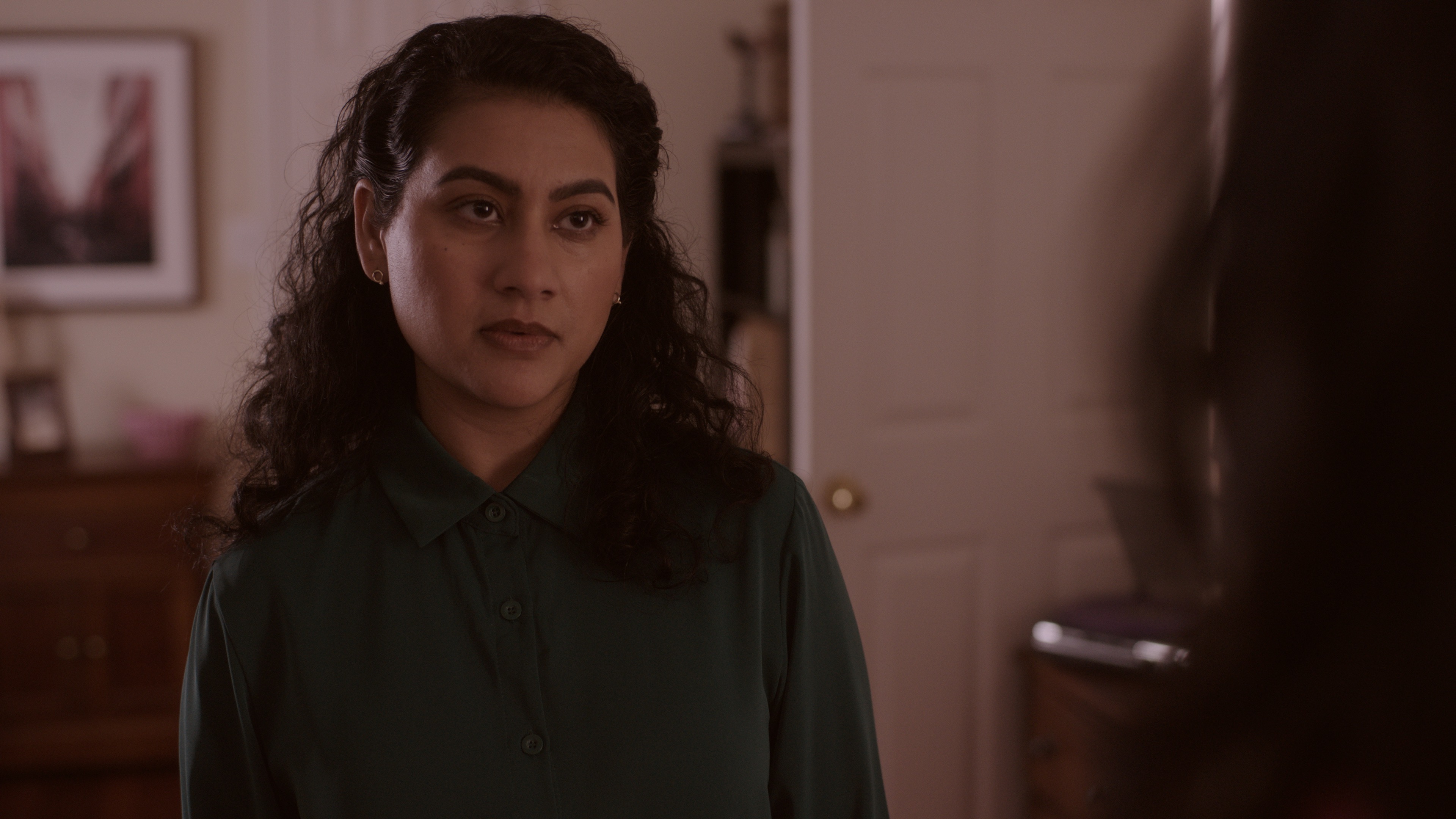

Naipaul is Jax, Asha’s wife who may or may not have been involved more than her spouse realized when Maya shows up out of the blue. It’s the portrait of a someone willing to take chance in order to help the one they love, though how this action is received by said person could be more problematic than of assistance. I like the understated nature of Naipaul’s performance, as again, it fits into the story in a way that makes sense, adding that layer of both contention and sympathy to the situation at hand. Supporting appearances are made by Reed Willard and Laura L Pryor as pair of delivery drivers who have a particular gift of specific substance being brought to the home by Maya. So, in total, “Asha” is an indisputably human story, created to exhibit how the hardships of the past can potentially alter our perception of someone forever if we allow it to, the even harder journey to find it within ourselves to forgive and forget, discovering it is possible, and extending that vital olive branch that starts it on the right path. The rest, to be determined. But ideally, for the renewal we genuinely yearn for. This world could use more of this. Period.
STAR RATING (out of 5):

As always, this is all for your consideration and comment. Until next time, thank you for reading!