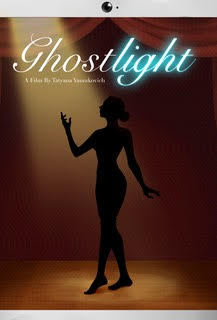
Indie Film Review “Ghostlight” Once more, COVID-19 takes center stage in a story about life, loss, who we were, what we’ve lost, and whether we choose to move forward

WATCH THE TRAILER BELOW:
First, the Recap:
The live for creating art is to be alive in a manner not common or even random. It encompasses the experience of watching that which has been within be brought into the light. Expression through whatever medium is most conducive to our personal process or the community in which we are immersed. Then, getting to share that with the wider world is the final step, with success and achievement following. When the ability to DO all of this is suddenly stolen away, can we find the means to exist as happily??
March 2020. That alone says it all. For a group of theater actors…Maisie (Suli Holum), Tito (Eduardo Machado), Alice (Cerris Morgan-Moyer), Sasha (Tara Ann Culp), Dierdre (Francesca Faridany), and Bathsheba (Juliana Francis Kelly)…their platform has been nullified by lockdown. Encountering the challenges both intimate and shared COVID-19 has manifested in each of their lives, one more hurdle baffles, frustrates, and haunts them all…the internet!
Next, my Mind:
It might be a completely forgone conclusion that we as a world are tired of hearing about COVID-19. The virus interrupted our lives in a manner that none of us will soon forget, and some of us will forever hold animosity for those taken from us by it. This is simply being real here, and likewise it is no exaggeration to state that filmmakers around the world chose the harsh realities of the pandemic as a subject matter for more than a handful of projects, in both short and feature length forms. This critic has seen a multitude of efforts about this topic, and cannot even fully deny that while the virus remains a part of our existence, perhaps it’s time to at least try to pull a “Frozen” and let it go. Not out of ANY disrespect for those who had loved ones taken by it, but rather to have a break from being reminded of just how precarious 2020 was for us as a society.
HOWEVER…..I then must say with equal fervency that BEING reminded of certain things over and over can also be a GOOD thing, in that it should challenge us to realize that the manner in which something impacts us ALL, much less changed the entire landscape of our routines, SHOULD be recalled, to LEARN, to GROW, to ACCEPT, and to find the means to move forward in a way that might actually HELP us face the things we fear or need to deal with. When looking at things in this light, the 78-minute indie feature film from writer/director/producer Tatyana Yassukovich, co-producer Jennifer Aydemir, plus executive producers Stanislas Yassukovich, James Rose, Robert Holum, and Mary Ellen Duke carries its grass roots mentalities and grounded statements about that year of COVID-19 with enough credibility and humor to at least be worthwhile to view and contemplate.
Now, it is a more slow-burn approach, in my opinion, and there are admittedly certain instances where the narrative tended to feel JUST a bit random/haphazard to follow fully, the story sees a group of theater actors having to encounter the unforgiving truth that performing on stage is no longer an option while everything must now exist on that most dastardly of mediums….the internet! The film centers on the varying perspectives being conveyed by each actor, all whom have their own additional life circumstances to deal with as well, and the mental toll it starts to take on them when NOT being able to turn to their normal avenue of release that IS the theater stage. It really becomes a study on a commonly explored subject…mental health during the pandemic…all while interweaving familial obligations and the hesitant interactions the group has with each other to try and remain sane and connected in a time of complete isolation.
Navigating the often overwhelming sense of loneliness, how we chose different (and not always healthy) means to try at cope with it, trying to press into some kind of daily pattern to have “normalcy” in a time there is anything BUT, the periods of self-assessment, self-criticism, flaws that suddenly show, how it seemed so hopeless that all we used to know would EVER come back, forgetting to mute ourselves on group Zoom calls, seeking what DOES satisfy us to find happiness, and being haunted by the voices of those we love and lost are but some of the underlying themes ventured into here. Much of this IS what most films about the pandemic tend to cover, but it really should NOT be seen as just the “same ole, same ole” when really recalling and grasping onto just how tedious and disrupted life was, how it affected us, how it reshaped us in many respects, and why we DO need to recognize the ways in which we DID grow, even within ourselves, due to it all.
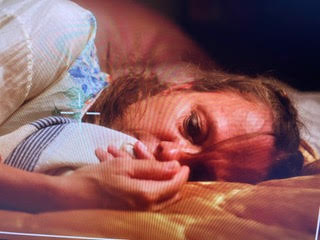
The film’s third act and finale are cathartic, effective, and holds the biggest impact to the proceedings. I still found myself wishing the film’s grander ambiance and pacing had been a little more engaging, or at least more steadily so throughout the entire runtime. I just felt a slight lack of total cohesion at times, even though the narrative and its intent are more than evident and still followable. An ensemble cast is always a tricky thing, only in that it takes everyone working together as a unified force in order for it to truly work. I do feel that was accomplished here, beginning with Holum as Maisie, whose frustrations with the pandemic don’t necessarily prevent her from trying her best to have the chance to act out the monologue her online class demands and in a way that she feels is apropos. Holum’s performance as Maisie is a portrait of steadfast determination as well as a certain degree of brokenness when her performance online gets some undue criticism.
Machado is all raw emotional turmoil through his performance as Tito, a playwright lamenting the state of things under COVID-19 lockdown while so deeply longing to remain connected with his partner and best friend as almost a last source of sanity. Machado treads these waters with credible and heartbreaking energy. Morgan-Moyer is likewise a pent-up yet almost fearful mess as Alice, who lives within a housing situation filled with angry neighbors whom she hears arguing, which only fuels her own sense of isolation and being alone, even as she like the others tries her best to find escape in performing, though whether her fragile state of affairs will allow her to have any real peace remains in question. Morgan-Moyer depicts this volatility solidly here. Culp carries a similar manner to Machado, but in a different way through her performance as Sasha, who attempts to sink into a focused routine she’s written out to keep life in line.

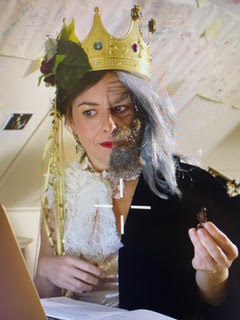
Yet even with all she tries, there’s a voice that plagues her, and once we know who it is she’s hearing, it makes Sasha’s descent into further inner upheaval more and more painfully poignant to witness, wondering if she WILL find solace and liberation from what’s been causing her restlessness. Culp embodies this throughout her performance AND let me say…Culp as a CAT! WOW! Watch the film for a very well-acted sequence in particular. Faridany actually pulls double-duty in the film, first portraying Dierdre, a HIGHLY eccentric and radically unhappy actress who isn’t very keen on her most prized livelihood being unceremoniously upended by COVID-19! She does anything she can do to fight back against it, even when it might rub people the wrong way! It’s one of those characters you ALMOST love to hate, and Faridany does a fantastic job enacting this kind of really energized chaos!
Then, she ALSO plays Natasha, the head of the theater acting class that now has to meet online and who has them all still create a monologue to share, again online. Natasha comes across as an elitist, even though she does genuinely support (or lament! LOL) the actors she’s coaching, and certainly does NOT like utilizing her camera for video calls, unhappy with how she looks! It’s another great performance by Faridany to play a more snooty/uppity character to comedic effect. Finally, there is Kelly as Bathsheba, a single mother just trying to do good by her now-at-home for school teenage son while also wishing to reconnect with him on a deeper level again. Her means to let loose a little via video gets a tad hairy later in the film, but could actually end up being a catalyst for what’s she been wanting the whole time. Again, it’s a believable performance, and Kelly is emotively strong.
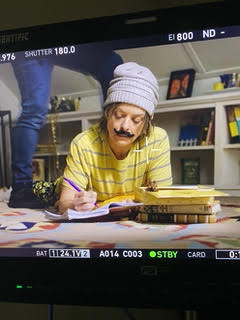
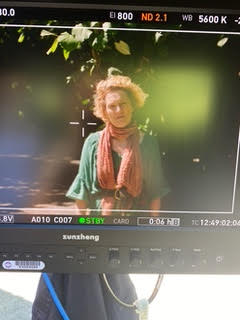
Primary supporting turns arrive from Boris Duke as Bathsheba’s son Dominic, who might just come to his mother’s aid when things get a little out of hand with some friends of his later in the story, and Joe Quintero is Jorge, Tito’s best friend (and former/current lover) whom is the voice of comfort and challenge for Tito. Additional supporting turns are made by Gabrielle Mahler, Jay Purdy, Koof Rehu, Suha Koliwad, Trey Lyford, Valerie Joseph-Darden, Jack Clark, Jon Dunston, Simon Kiley, and Ginger Leigh. So, in total, “Ghostlight” is a decent drama/comedy film, showcasing the actualities of COVID-19’s collision with our state of being as humanity, how we are haunted by those we’ve lost, reflecting who we once were and how things have been altered, and the need to release what’s burning inside of us, relinquishing it, moving ahead as one stage’s curtain falls, but another’s rises up, giving us hope that we DO still have a future, even an audience, in front of us.
STAR RATING (out of 5):

As always, this is all for your consideration and comment. Until next time, thank you for reading!