Short Film Review “The Nomophobe” Our cell phone-centric world gets a consummate calling out to expose the sobering nature of our addictions to them

WATCH THE TRAILER BELOW:
First, the Recap:
Unhidden dependency. We all have those elements in life that give us joy, that occupy our time, that ideally form out of habits which ultimately aid in our personal growth and who we are. But, there is love of something and then there is relentless reliance on it. The former can have the positive influence we wish. The latter, however, can pave a road that only manifests pain, isolation, and distance between what is truly real and what is not, a connection either found….or lost.
In London, teenager Madison (Beau Gadsdon) longs for nothing else than to be absolutely caught up in…..her phone. A constant focus looking down at the small screen, or looking up for only enough time to snap a pic she hopes will get “likes”, her long-suffering mother Laurie (Clara Paget) is doing all she can to be in her daughter’s world again, but on a purely human level. With nothing but resistance being faced, can Laurie come up with a way to capture Madison’s attention again in order to heal the bond they once shared?
Next, my Mind:
When you talk about quality indie cinema, for this critic anyway, you’re speaking of a genre within the grander filmmaking community that has higher value on story, character, and intentionality of messaging than the mainstream. Period. There’s an impact, something that’s meant to potentially even circumnavigate entertainment, in order to bring relevant topics to the forefront, but do it in a manner that also allows as to appreciate the very ART of filmmaking and those creating it. I’ve said this in so many words, so many times, because it simply remains apropos and, quite frankly, TRUE. Hence, when we arrive to this newest short film from writer/director/producer James Hughes, producer/executive producer Cherene Bracegirdle-Smith, plus executive producers Bollie Lee Jarratt Jr., Dietmar Kuhl, and Anthony Maddock, we are entreated to ALL of what has been stated above and then some.
From the start, and subsequently through all twenty-four minutes of its runtime, a heartily profound atmosphere of relevancy to our modern times intermixed with a stirring, fiery, and powerfully resonant portrait of the deconstruction of human interactions and relationships in the age of tech-reliant hype, the damage it can cause, and the requisite need for us to wake up and SEE each other again is offered with unflinching verity and undeniable punch. The narrative, centered on a teen girl, her obsessive focus on her cell phone, the frustrated brokenness of her mother who’s feeling like she’s losing her daughter, and the need to rekindle their bond that manifests, is a blunt force exercise in illustrating what we already know yet honestly seem to refuse to accept in today’s world….that our constant “need” for our phones represents mass mental decay and reality slipping away. Sorry that might sound harsh, but let’s face it, it IS happening.
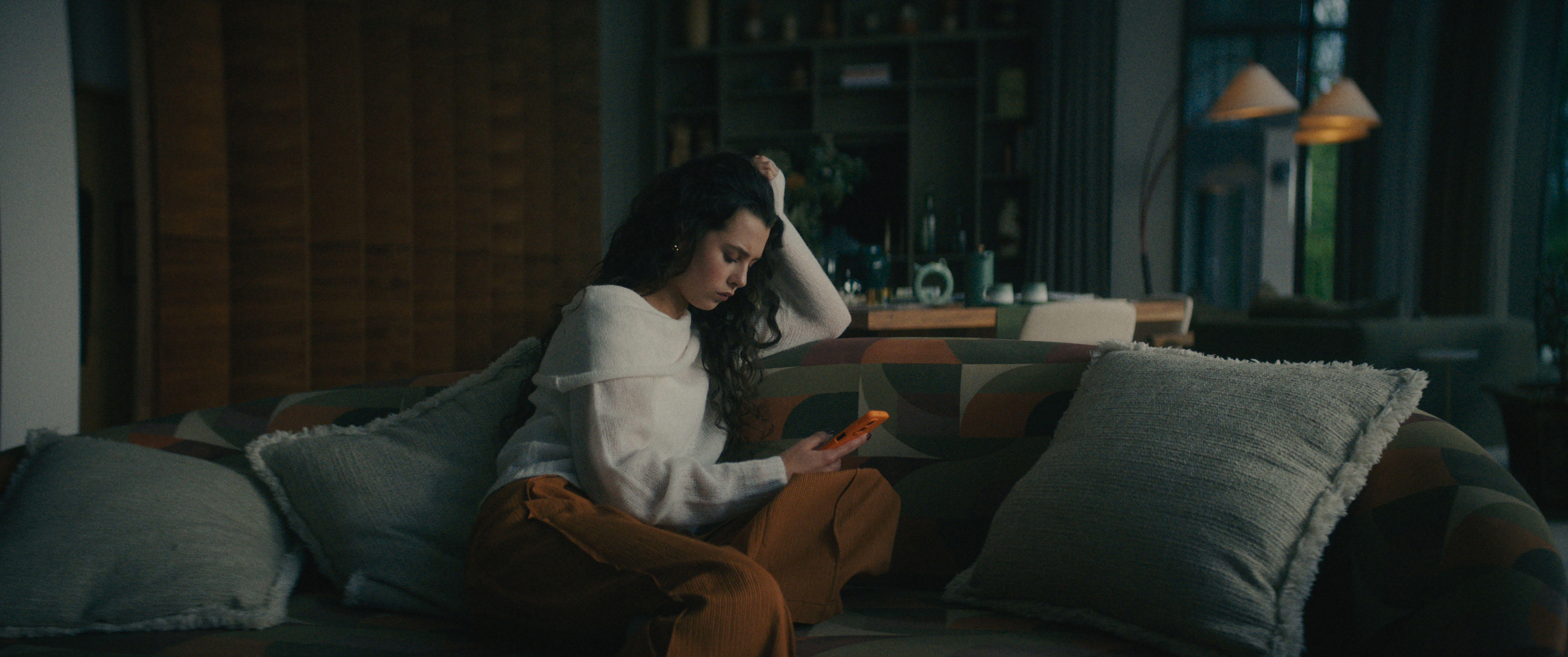
The potency of this film and its choices on how to address this literal worldwide epidemic is conveyed with such deeply emotive strength, willing to put all of its messaging in your face, unapologetically, yet not to push you away, but rather prick the collective conscious once more and remind us that perhaps we need to take a digital breath, step back, genuinely re-assess our priorities, and find our way BACK to being human beings interacting with each other again. Yes, we’ve heard all of this countless times over….and yet what ARE we actually doing about it?? I absolutely treasured how Hughes’ filmmaking style and approach to his subject matters shines forth here, eclipsing, then flat out breaking through the “awareness-raising” ceiling and showcasing just what literal healing and reconnection could happen if we were willing to look UP from our small screens, NOT treat them as “everything”, and realize life has SO MUCH MORE to offer.
Within the context of the film’s foundational/core gist, the concepts of being out of touch with what’s real, digital escapism, the sheer, aggressive grip of addiction, how so much intense focus on our phone as the center of our universe can be redefining who we are, restructuring our identity, the pull of “the business” of cell phones and those pushing them on us as a society, how we are even used by them to not only keep us addicted, but promote constant evolution of the “drug” that’s captured us, and being confronted by the hard truths of precisely what our fixation is costing us within and without, while then experiencing the actual “detox” and sense of fear when what we have leaned on for so long is taken away are all addressed here, and done so with the same magnitude of raw, candid, unequivocally compelling dynamic that keeps you wholly immersed in the narrative and the character’s journeys.
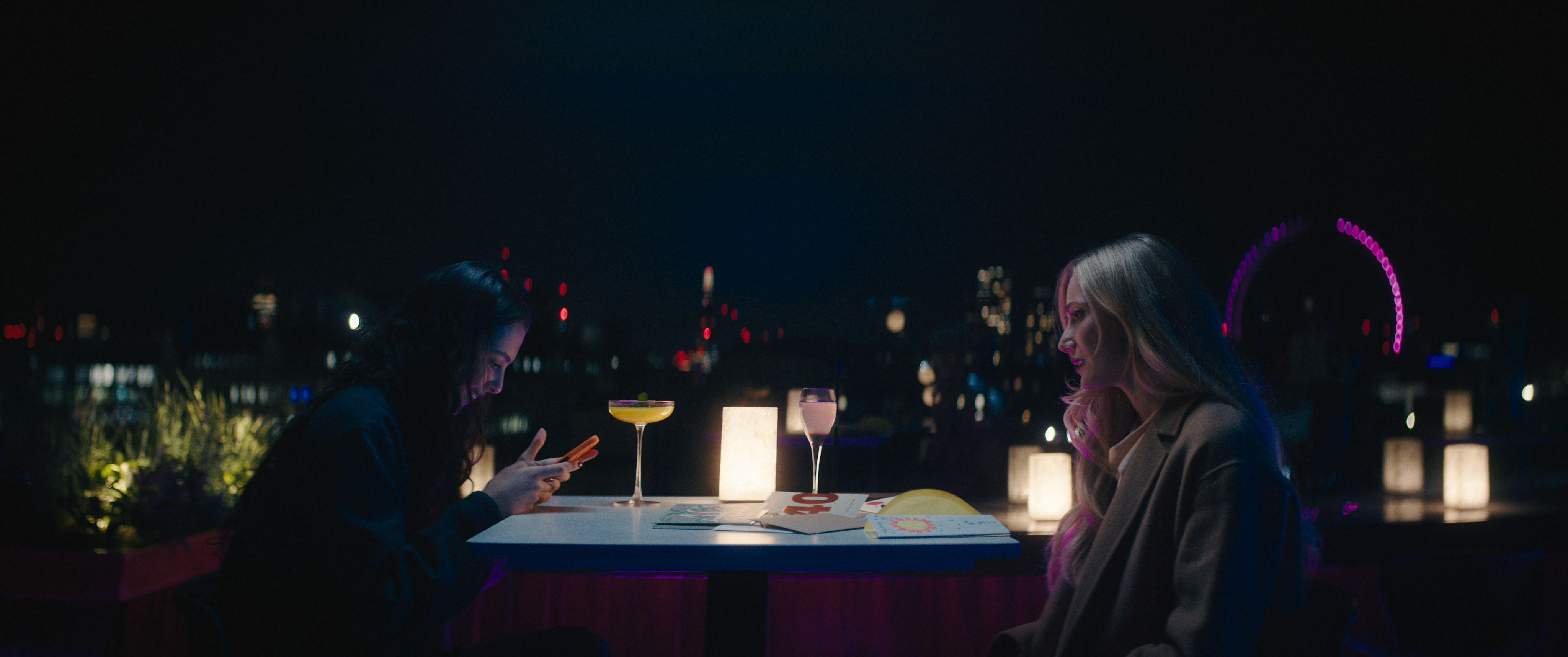
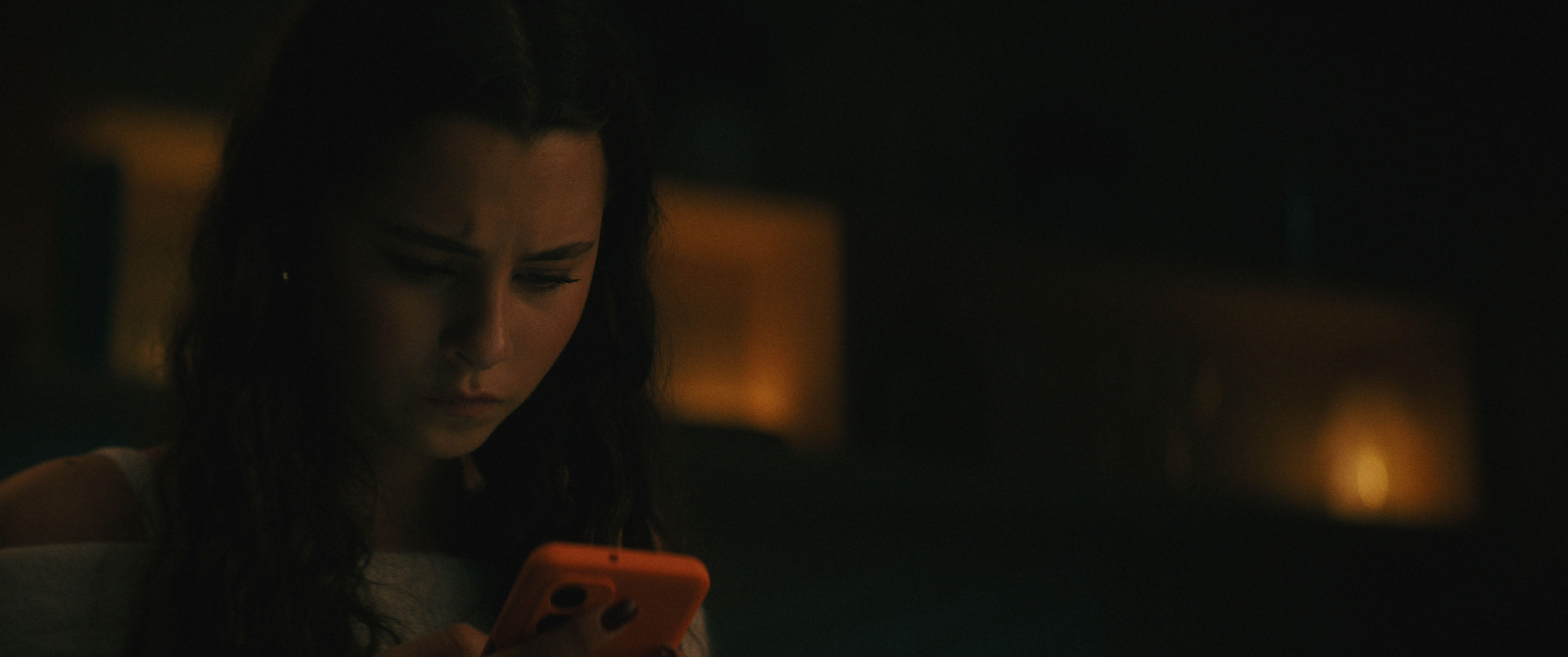
The finale is effective, cathartic, necessary, and so deftly executed to have the substantive yet fully accessible hit your heart and soul, no exaggeration. The visuals here are a superb mix of both totally grounded and surrealistically fantastical imagery that complement each other adeptly and enhance the declarations this film is making. Likewise, the musical score is ethereal and haunting when present, accompanying particular scenes with eloquent soundscapes that certainly move you. Gadsdon is a beautiful and evocative illustration of not only the contemporary generation, but truthfully all of us, and the harsh actuality of cell phone-centered compulsions and their inexorably dangerous pull through her role here as Madison. A teen so swallowed up by now-ingrained, single-minded, all-consuming, attention-span draining phone usage, Madison’s relationship with the real world, much less her mother, is seemingly impossible to redeem.
Even as the pair battle between themselves, will Madison ultimately be able to recognize the struggle she has and be open to conquer it? It’s one of those performances that’s filled with a kind of palpable energy that oozes forth and really does hit you, and Gadsdon totally nails it with zeal and, often, heartbreaking vulnerability. This film becomes the second one recently I’ve had the opportunity to witness Paget in action (the first being “The Pearl Comb”, which I will be reviewing here soon!), and believe me, I am a fan of the actress now, as she imbues the characters she plays with a fiery intensity that can be subtle or explosive. Here, she channels a more subdued degree of fiery resolve that still burns bright with emotional power and understated vitality via her turn as Laurie, Madison’s long-suffering mother whose bond with her beloved daughter is anything but present anymore.
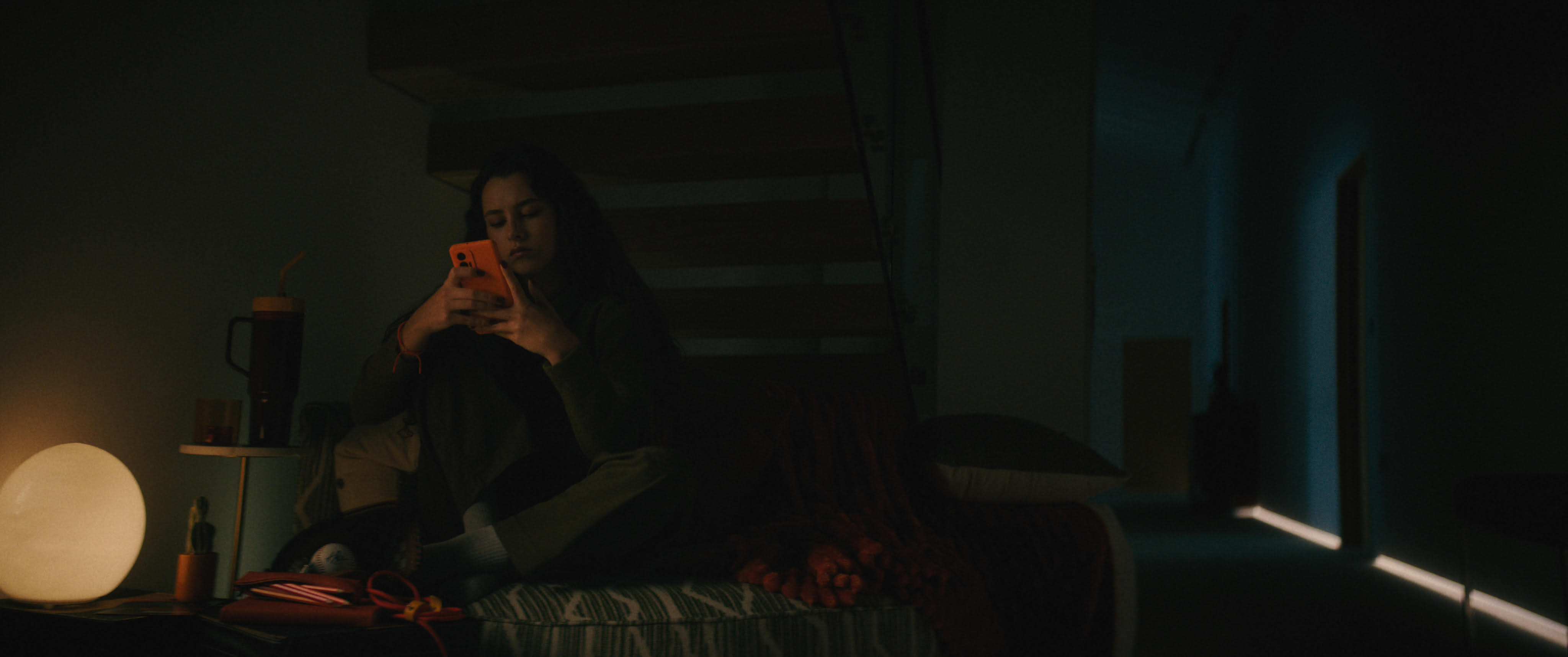
Trying her best to be loving while also confronting the growing agitation with Madison and her addiction to her cell phone, Laurie’s often at the end of her rope and might even seem to finally just be giving up. But when her motherly devotion and authentic desire to see Madison understand and face her issues, Laurie does what she must to make it happen. It’s touching portrayal that showcases the adoration of a parent towards their child, with Paget embodying those seas of emotive waves wonderfully and credibly. Primary supporting roles come from Michael Strelow as Abner, who could represent Madison’s way out of her as-of-yet-admitted dilemma, and Jack Brett Anderson as William, a shady cell phone company exec who acts as the catalyst which currently keeps Madison’s mania fueled, a tech world tempter.
Additional appearances are made by Apple Yang, Dana Blacklake, Simone Mumford, Sumit Chakravarti, Nina Dontu, Dominic Liburd, Sharandeep Salh, Lemmar Daytes Reid, Monika Van Wyk, Ficke Tsui, and Ella Goodspeed amongst a host of others. As always, a shout-out to you all for your contributions to the film. So, in total, “The Nomophobe” is a definitive proclamation and exposing of the realities cell phones have on our current culture, convincingly persuasive in its purpose, and ideally a wake-up call to all of us. One hopes this will be the kind of reminder that for all the legitimate benefits these devices provide, perhaps it’s time to let the 5-bars fade and the signals vanish, even if for a season, so we can get back to looking up and ahead of us to find the means to connect as people once again.
STAR RATING (out of 5):

As always, this is all for your consideration and comment. Until next time, thank you for reading!